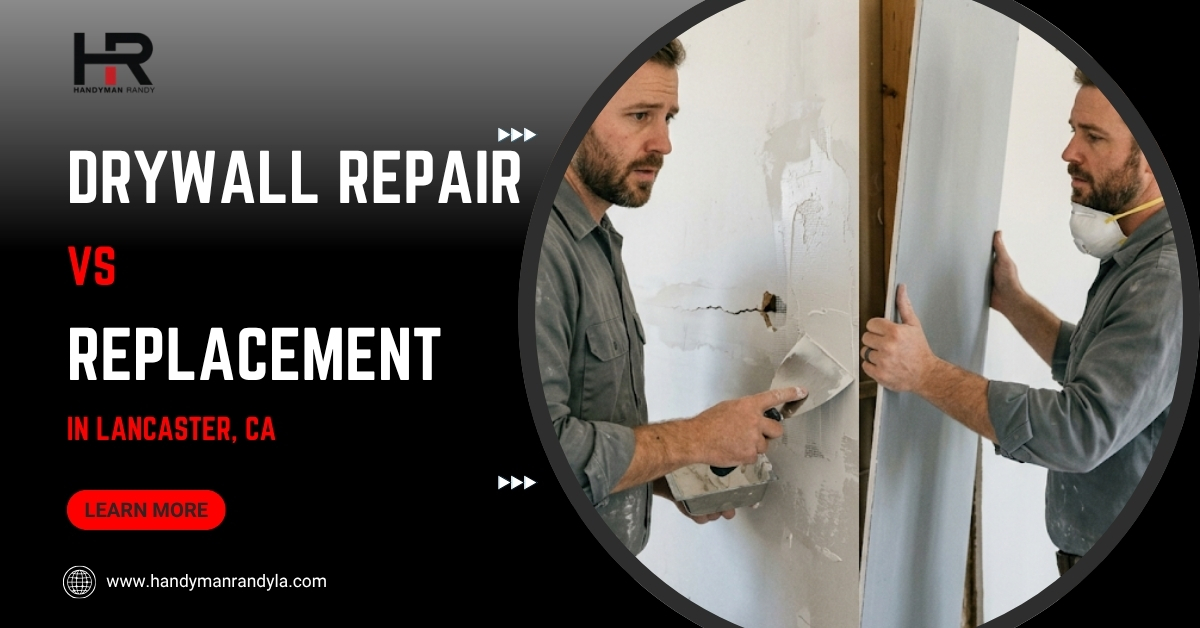
Drywall Repair vs Replacement: Which Is Right?
Repair your drywall when the damage is small and dry, like holes under 12 inches or hairline cracks, and replace it when the board turns soft, sags, grows mold, or fails across a wide area.
To be honest, most wall damage we see needs a simple repair, not new board. But the wrong call costs real money either way. Patch a rotten wall and the problem comes back. Tear out a wall that needed a $200 patch and you paid five times too much. We make this call every week on jobs across Palmdale, Lancaster, and the rest of the Antelope Valley, so here is the same checklist we run before every drywall repair and replacement call.
Key Takeaways
Repair drywall when the damage stays small, dry, and limited to one spot.
Replace drywall when it feels soft, sags, grows mold, or fails across a wide area.
Drywall repair costs $150 to $2,000, with an average around $611.
Removing and replacing drywall costs $2.00 to $6.00 per square foot.
Wet drywall that stays soft after drying always needs replacement.
What Is the Difference Between Drywall Repair and Replacement?
Drywall repair fixes a damaged spot with patches and joint compound, while replacement removes whole sections of board and hangs new sheets.
A repair keeps the old wall. The pro fills or patches the bad spot, adds joint compound and drywall tape, sands it smooth, and matches the texture. A replacement starts with demolition. The old board comes off the studs, the pro checks the framing, and new sheets go up. Drywall repair takes hours. Replacement takes days. Many jobs mix the two. We often replace one soaked sheet and patch the small stuff around it on the same visit.
When Should You Repair Your Drywall?
Repair the wall when the damage is smaller than about 12 inches, the board still feels firm, and the cause was a one-time hit.
Most everyday damage falls in this group. If the wall around the bad spot stays solid and flat, a patch will hold for decades. A good patch on firm board outlasts the paint on top of it. Repair makes sense for:
Nail holes, dents, and scuffs
Doorknob holes and other small impact damage
Hairline cracks above doors and windows
One dry water stain from a leak you already fixed
Nail pops and loose tape seams
When Should You Replace Your Drywall?
Replace the drywall when the board feels soft or spongy, sags from the ceiling, grows mold, or shows damage across large areas.
These problems live inside the board, not just on the surface. Once the gypsum core breaks down, no patch can bring the strength back. Plan on replacement when you see:
Soft, crumbly, or bulging sections
A sagging ceiling or board pulling away from the studs
Mold patches or a steady musty smell
Big cracks that come back after every fix
Water stains that keep spreading
Several damaged spots on the same wall
How Can You Test Your Drywall at Home?
Press the damaged area with the handle of a screwdriver, because healthy drywall feels firm and bad drywall feels soft or spongy.
This two-minute test settles most repair or replace questions. Push gently on the stain or damaged spot. Solid board barely gives. Wet or rotten board dents, flakes, or even punches through with light pressure. Check 12 to 24 inches around the spot too, since water wicks up through the board far past what your eyes can see. A pro confirms it with a moisture meter, but the press test gets you most of the way there.
How Much Does Drywall Repair Cost?
Drywall repair costs $611 on average, and most patch jobs run between $150 and $2,000.
The size of the damage sets the price more than anything else. Most pros also charge a trip fee near $150 even for tiny fixes, so group your repairs into one visit. Common drywall repair prices look like this:
Small holes under 4 inches: $100 to $250
Fist-size holes up to 12 inches: $200 to $500
Big holes over 12 inches: $400 to $1,000+
Cracks: $350 to $1,000
Textured walls: add 30% to 40% for texture matching
How Much Does Drywall Replacement Cost?
Removing and replacing drywall costs $2.00 to $6.00 per square foot, including tear-out, new board, and a standard finish.
The removal alone runs $0.50 to $2.50 per square foot, since someone has to pull the old board and haul it to the dump. New sheets cost $10 to $20 each, and hanging plus finishing runs $1.50 to $3.50 per square foot. A full 12x12 room lands around $1,000 to $3,000 at those rates. Soaked board costs more to dump too, because wet drywall weighs three to five times more than dry board.
Is It Cheaper to Repair or Replace Drywall?
Repair costs less for one or two damaged spots, but replacement wins once the damage covers most of a wall or keeps coming back.
Here is the simple math we share with customers. Three big patches on one wall can cost more than hanging one fresh sheet, and the new sheet looks better. Repairs on rotten board also fail, so you end up paying twice. When drywall repair quotes climb past half the price of new board, Handyman Randy tells you to replace it. That honesty saves you money down the road.
What Should You Do About Water Damage and Mold?
Dry the wall within 24 to 48 hours and repair it if it stays firm, but replace any board that turns soft, sags, or grows mold.
Water damage hides well. Clean water from a supply line, dried fast, often leaves board you can save. Water that sat for days soaks the core and ruins it. Mold changes the answer. The EPA says to bring in a pro when mold covers more than 10 square feet, and moldy drywall almost always comes out, because the growth runs through the paper face. After any soaked wall, check the building insulation behind it too. Wet insulation holds moisture against the new board and starts the whole problem over.
How Does the Antelope Valley Affect This Choice?
Most drywall damage in Palmdale and Lancaster comes from desert temperature swings and roof-mounted swamp coolers, and both usually start as repairs.
Our hot days and cold nights make framing move, so hairline cracks and nail pops show up in almost every tract home here. Those are quick fixes. Swamp cooler leaks are the local trap. A small ceiling stain under the unit can hide a soaked patch of board, so test it before you paint over it. Most homes in Palmdale, Lancaster, and Quartz Hill wear orange peel or knockdown texture, and a repair only disappears when that texture matches. One more local note. Homes built before the 1980s can hold asbestos in old texture and joint compound, so test before any tear-out.
Should You Fix It Yourself or Call a Pro?
Patch nail holes and small dents yourself, and call a pro for soft board, ceilings, mold, and anything bigger than a fist.
A patch kit costs $10 to $55 and handles small drywall repair jobs fine. Full replacement is a different animal. It means demolition, dust control, hanging 50-pound sheets, three coats of mud, sanding, and texture work. Handyman Randy fixes walls every month where a weekend patch shows through the paint, and the redo costs more than the first visit would have. If you are not sure which side your wall falls on, send us a photo and we will tell you straight.
Still Weighing Drywall Repair vs Replacement?
Here is what Palmdale homeowners ask Handyman Randy about damaged walls most often.
How do I know if my drywall needs replacing?
Press it. Soft, spongy, or crumbling board needs replacement. So does board with mold, sagging, or stains that spread after you fixed the leak.
Can water-damaged drywall dry out on its own?
Sometimes, if the water was clean and you dry it within 24 to 48 hours. Board that stays soft after drying must come out.
Is it OK to paint over a water stain?
Only after you fix the leak and confirm the board is dry and firm. Paint hides the stain, not the damage under it.
How long does drywall replacement take?
Plan on 2 to 4 days for one room. Mud coats need drying time between passes, so the finish work sets the schedule.
Does insurance pay for drywall replacement?
Often yes for sudden damage like burst pipes or storms. Slow leaks and old wear usually fall on the homeowner. Read your policy.
Can I replace just part of a wall?
Yes. Pros cut out the bad section, hang a new piece between the studs, then tape, mud, and texture it to match the wall.
Want a Straight Answer on Your Walls in Palmdale?
Handyman Randy handles drywall repair and replacement across Palmdale, Lancaster, and the whole Antelope Valley. Call (661) 231-3999 and we will look at the damage, give you one honest price, and tell you if a simple patch will do the job. We work Monday through Saturday, 6 AM to 8 PM.
