

Blogs
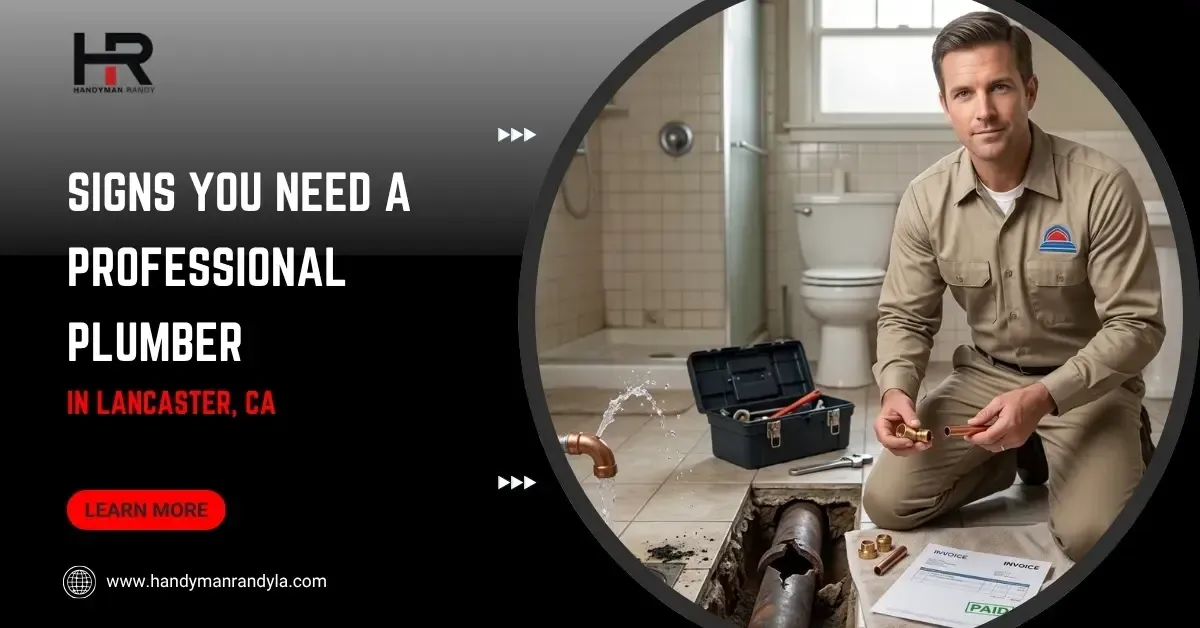
Warning Signs You Need a Professional Plumber 2026 | Handyman Randy
You need a professional plumber when your drains back up, your water pressure drops, your pipes make noise, or your water bill jumps without explanation. Catching these warning signs early can save Palmdale and Lancaster homeowners hundreds or even thousands of dollars in water damage repair. Handyman Randy has seen what happens when small plumbing problems get ignored, and this guide covers every sign that tells you it is time to stop waiting and call a licensed professional.
Most plumbing problems show clear signs before they get bad. A slow drain, a strange pipe sound, or a higher water bill all point to something worth checking. Catching these signs early costs far less than dealing with water damage or a burst pipe. Here are the signs that tell you it's time to call.
Key Takeaways
Multiple drains backing up at the same time almost always points to a main sewer line blockage, not a surface clog, and needs a professional camera inspection to find the exact location.
Low water pressure in Palmdale and Lancaster homes often comes from hard water mineral buildup inside older pipes, and cleaning the showerhead alone won't fix a system-wide pressure drop.
A water bill that rises without any change in usage habits is one of the clearest signs of a hidden leak, and checking your water meter overnight is a fast way to confirm one.
DIY drain cleaners are a short-term fix that can damage older pipe walls with repeated use, making the original problem more expensive to repair when a plumber eventually inspects it.
Handyman Randy serves Palmdale, Lancaster, Quartz Hill, Sun Village, and the wider Antelope Valley with plumbing expertise and upfront pricing before any work begins.
You Have Slow Or Backed-Up Drains
Multiple drains backing up at the same time means you have a clog in your main sewer line.
One slow sink often just needs a quick clean. But when your kitchen sink, bathtub, and shower all drain slowly together, the blockage sits deep in your main line. Hair, grease, and soap build up in pipes over time and create these deeper clogs. Store-bought drain cleaners rarely reach that far, and some damage older pipes with repeated use.
A few other things cause stubborn main line blockages in Palmdale and Lancaster homes:
Tree roots growing into older clay or cast iron sewer pipes underground
Grease and food waste building up past where a garbage disposal can clear
Buildup from washing machine or dishwasher drain lines connecting to a shared pipe
Collapsed or cracked sections of pipe from age or shifting soil
Water backing up in your shower when you flush the toilet is a clear sign your main sewer line has a problem. A camera inspection down the line finds the exact spot instead of guessing.
Note: If you are also dealing with foundation movement or cracked slabs that affect your drain layout, our home repair services in Palmdale cover structural and plumbing coordination in one visit.
Your Water Pressure Has Dropped
Low water pressure usually points to mineral buildup, a hidden leak, or corroded pipes.
Hard water is a real issue in Palmdale and Lancaster. Over time, mineral deposits build up inside pipes and reduce water flow throughout the house. If cleaning your showerhead doesn't fix the pressure, the problem sits further inside the system.
Cause | What It Means |
|---|---|
Mineral buildup | Hard water narrows the pipe interior over time |
Hidden leak | Water escapes before reaching your fixtures |
Partly closed valve | A shutoff valve somewhere in the line isn't fully open |
Corroded pipes | Older pipes restrict flow as they break down inside |
A local plumber tests the system fixture by fixture to find where the pressure drops, then decides whether a flush or a pipe repair is the right fix. The Water Quality Association notes that hard water affects millions of U.S. homes and is a leading cause of premature pipe wear, making pressure issues in high-mineral areas like the Antelope Valley especially common.
You Hear Strange Noises From Your Pipes
Banging, gurgling, or whistling from your pipes usually means a blockage, a loose fitting, or a pressure issue.
Plumbing runs quietly when everything works right. Unusual pipe noise means something inside needs attention.
Sound | What It Usually Means |
|---|---|
Banging or hammering | Water hammer from a sudden pressure change |
Gurgling drain | A blocked or poorly vented drain line |
Whistling | A restricted pipe or valve not fully open |
Constant dripping | A hidden leak inside a wall |
These sounds point to real problems that get worse over time. A plumber can trace each one back to the source in a single service call. Water hammer, in particular, can stress pipe joints and fittings over months of repeated pressure spikes, eventually causing a fitting to fail inside a wall.
You Smell Sewage Anywhere In The House
A sewage smell indoors usually means sewer gas is leaking from a cracked pipe, a dry drain trap, or a blocked vent.
Sewer gas carries methane and other gases that are not safe to breathe indoors. A dry drain trap in a guest bathroom or basement lets that gas rise straight through the drain opening. A cracked sewer pipe or a blocked vent pipe on the roof causes the same sewage smell. The U.S. Environmental Protection Agency classifies sewer gas exposure as a potential health hazard at sustained levels. Don't mask it with air freshener. Call a plumber to find the source and fix it properly.
If the smell is strongest near your gas appliances or water heater, that may point to a gas line issue rather than a drain problem. Our licensed electricians in Lancaster and Palmdale can help rule out appliance-related sources when diagnosing mixed odor complaints.
Your Water Bill Jumped For No Reason
A water bill that climbs without any change in your habits almost always points to a hidden leak.
A small, steady drip can waste close to 10,000 gallons a year with no visible puddle. The U.S. Geological Survey's WaterScience School estimates that a faucet dripping once per second wastes over 3,000 gallons annually. Changes in water usage that you did not make almost always mean water is leaving the system somewhere it should not.
Here's how to check for a hidden leak yourself:
Check your water meter before bed
Don't use any water overnight
Check the meter again first thing in the morning
If the number changed, you have an active leak
This method works well for slab leaks hidden under a concrete floor and leaks running inside walls where you'd never see the water directly.
Your Water Looks Discolored Or Smells Off
Brown, yellow, or cloudy water points to corrosion inside your pipes or your water heater tank.
Discolored water damages your fixtures, stains laundry, and wears down appliances connected to your water supply. Temporary brown water after city street work clears up on its own within a few hours. Water that stays discolored every time you turn on the faucet needs a plumbing inspection to find the source. Left alone, corroded pipes eventually crack or fail completely.
Cloudy or milky water is often caused by dissolved air or sediment, while yellow or brown water almost always signals rust from corroding iron or steel pipes. Either way, a plumber can test the water at the fixture and at the meter to narrow down exactly which section of pipe is failing.
Your Water Heater Is Acting Up
If your water heater makes noise, runs out of hot water fast, or shows rust near the tank, it needs a plumber.
A water heater shows clear signs before it fails. Watch for these:
No hot water, or hot water that runs out much faster than usual
Popping or rumbling sounds from inside the tank
Water flow from the hot tap feels weaker than the cold
Rust-colored water coming from the hot tap only
Water pooling near the base of the tank
Sediment builds up in the water heater tank over years of use. Most tanks last 8 to 12 years. If yours is in that range and showing any of these signs, get a local plumber to check it before it fails and causes water damage to the floor or walls around it. The U.S. Department of Energy recommends annual water heater maintenance to extend tank life and maintain efficiency, which includes flushing sediment and inspecting the anode rod.
You Notice Water Stains Or Standing Water
A water stain on your ceiling or wall means a leak is already running behind the surface.
Standing water under a sink, near your water heater, or around a fixture needs attention right away. Here's what these signs usually point to:
A ceiling stain directly below a bathroom means a supply or drain line is leaking above it
A damp wall near a pipe often means a slow drip inside the wall cavity
Standing water near a washing machine or dishwasher connection points to a loose or cracked drain line
Wet flooring near a toilet base usually means a failed wax ring seal
Left alone, these leaks damage drywall, warp flooring, and create mold growth inside walls. Plumbing repair costs go up the longer water sits behind a surface. The Centers for Disease Control and Prevention notes that indoor moisture and mold can trigger respiratory issues, especially in children and older adults, making fast leak repair a health priority as much as a home maintenance one.
When A Problem Needs A Plumber Right Away
A burst pipe, sewage backup, gas smell, or no water at all needs an emergency plumber right away, not a scheduled visit.
Some problems can't wait until morning. If you're dealing with one of these, plumbing costs work differently than a routine service call:
A burst pipe spraying water across the floor or ceiling
Sewage backing up into your bathtub, toilet, or shower
A gas smell near your water heater or any gas line
No water coming from any faucet in the house
Our guide on Emergency Plumbing Cost vs Scheduled Service breaks down what you'll pay for an urgent call versus a scheduled visit so you know what to expect before you dial.
For non-plumbing emergencies that affect your home's systems at the same time, our handyman services in Lancaster cover electrical shutoffs, drywall cuts for pipe access, and coordinated repairs in a single visit.
Why DIY Often Makes It Worse
DIY fixes like chemical drain cleaners often hide the real problem and can damage your pipes further.
Chemical cleaners eat away at older pipe walls with repeated use. A patched leak often masks a bigger issue underneath. Anything involving your main sewer line, your water heater, or a gas line needs trained hands and proper tools. Getting a local plumber early almost always keeps repair costs lower than fixing the damage from a delayed plumbing repair.
Annual maintenance by a professional plumber also helps you avoid most of these signs in the first place. A yearly check catches small problems before they turn into emergency calls.
It is also worth noting that unlicensed plumbing work on sewer connections, gas lines, and water heaters may void your homeowner's insurance policy or create issues at resale. California requires licensed contractors for these scopes under the Contractors State License Board guidelines. Always verify a contractor's license status before any major plumbing work begins.
Why Palmdale And Lancaster Homeowners Trust Handyman Randy
Handyman Randy has years of hands-on experience fixing plumbing issues across Palmdale, Lancaster, and the Antelope Valley.
Homes in this area deal with hard water that speeds up mineral buildup inside pipes, and many older properties still run on original plumbing that wasn't designed for today's water supply demands. Handyman Randy gives you a straight answer about what's wrong and what the repair costs before any work starts. Whether it's low water pressure in Quartz Hill, a failing water heater in Sun Village, or a main line clog in Lancaster, the team treats every home like their own.
Hot, dry summers and winter cold snaps both stress plumbing systems across the Antelope Valley. Handyman Randy knows the local conditions and brings that experience to every job. You can explore our full service area coverage before you call to confirm we serve your neighborhood.
FAQs
What Are The Most Common Signs You Need A Professional Plumber?
The most common signs you need a professional plumber include multiple slow drains, low water pressure, strange pipe noises, a sewage smell indoors, discolored water, and a water bill that jumps without explanation. Any one of these points to a plumbing problem that needs a professional inspection.
How Do I Know If My Slow Drain Is A Main Line Problem Or Just A Surface Clog?
If only one drain runs slow, it's likely a surface clog you can clear yourself. If two or more drains back up at the same time, or if water comes up in your shower when you flush the toilet, the blockage sits in your main sewer line and needs a plumber.
Can A Dripping Faucet Or Small Leak Wait, Or Does It Need Fixing Right Away?
A slow drip won't flood your home, but it can waste up to 10,000 gallons a year and raise your water bill. It's worth fixing soon, but it doesn't need an emergency call. Book a scheduled visit and skip the after-hours fee.
How Long Do Water Heaters Last Before They Need Replacing?
Most water heaters last 8 to 12 years. If yours is in that range and showing signs like rumbling noises, rust-colored hot water, or slow heat recovery, have a plumber inspect it before it fails completely and causes water damage.
Does Hard Water In Palmdale And Lancaster Cause More Plumbing Problems?
Yes. The Antelope Valley has notably hard water, which means higher concentrations of calcium and magnesium minerals in the water supply. These minerals build up on pipe interiors, showerheads, and water heater elements over time, reducing water pressure and shortening appliance life. A plumber can assess buildup levels and recommend a whole-house water softener if the scale is severe.
How Do I Know If I Have A Slab Leak?
Slab leaks are hidden beneath your concrete floor and show up as warm spots underfoot, the sound of running water when no fixtures are open, a rising water bill, or unexplained cracks in flooring. The overnight meter test described above is one of the fastest ways to confirm an active leak when no visible source exists.
Book A Visit Before It Gets Worse
If you spotted any of these signs, don't wait. Handyman Randy answers the phone, tells you the price upfront, and gets the job done right the first time. Contact us or call (661) 231-3999 to book in Palmdale, Lancaster, Quartz Hill, or anywhere across the Antelope Valley.


Expert Interior and Exterior Painting Solutions.
📍 Palmdale, CA 93551
📞 +1 661-231-3999
🕒 Mon - Sat: 8 AM to 6 PM, Sun: Closed
© 2026. All rights reserved.