

Blogs
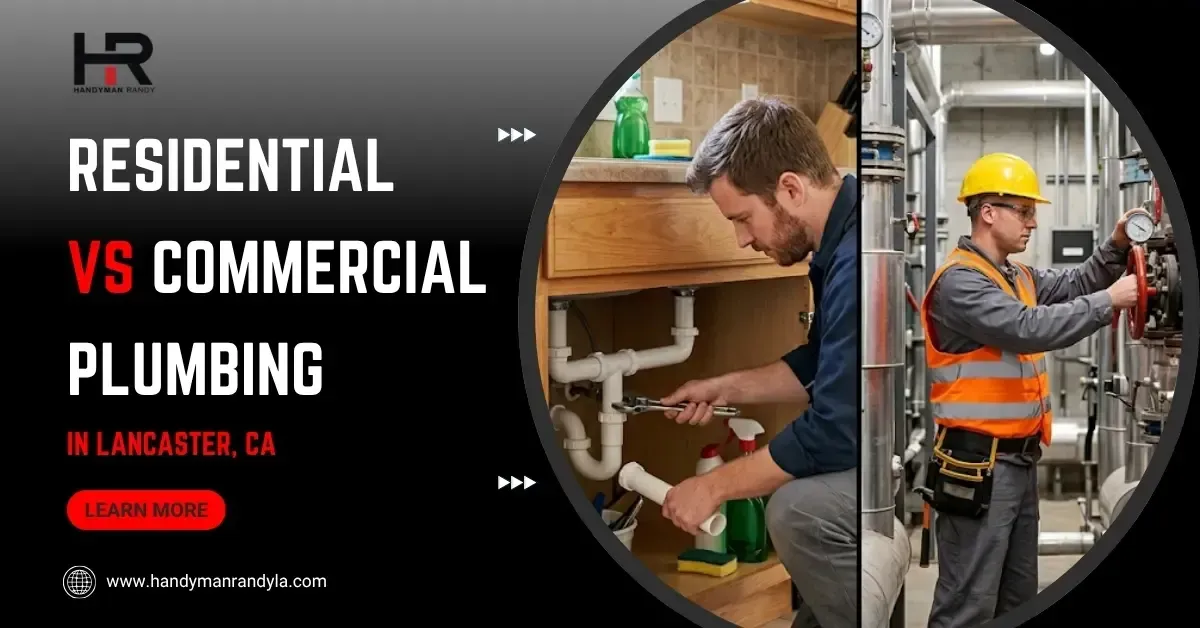
Residential vs Commercial Plumbing: What's the Difference?
The main difference is that residential plumbing serves homes with small pipes and light water use, while commercial plumbing serves big buildings with larger pipes, heavy demand, and stricter codes.
Last spring, a guy in Palmdale bought a small strip mall off Avenue S. He called his house plumber for a backed-up bathroom. The plumber took one look at the 3-inch drain line and the 199-gallon water heater, then told him he needed a commercial crew. Most people in Palmdale and Lancaster get this wrong. This guide on Residential vs Commercial Plumbing: What's the Difference? breaks it down so you know what you have, who to call, and what it costs across the Antelope Valley.
Key Takeaways
Residential plumbing serves 2 to 10 people daily with ½ to 2-inch pipes, while commercial plumbing handles 50 to 5,000+ users with 1 to 6-inch pipes under higher pressure.
Home water heaters hold 40 to 80 gallons, but commercial tanks reach 100 to 250 gallons, since restaurants and hotels burn through hot water 10x faster than a family.
Homes follow the IRC code with $50 to $300 permits, while commercial work follows the stricter IPC code with $300 to $2,500 permits and yearly health inspections.
Call a residential plumber for single-family homes, duplexes, and buildings under 4 units; call a commercial plumber for restaurants, schools, hotels, and apartments with 5+ units.
Commercial repairs cost 3 to 10 times more than home jobs because of bigger parts, larger crews, night-shift labor, and downtime losses, so a $300 home leak fix can hit $1,200+ at a Lancaster restaurant.
What Is Residential Plumbing?
Residential plumbing is the water supply, drain, and fixture system inside single-family homes, duplexes, and small apartments.
Most homes in Palmdale serve 2 to 10 people a day. The pipes run ½ inch to 2 inch wide. You get basic stuff like a toilet, sink, shower, and a tank water heater. Common jobs include leak repair, drain cleaning, and a water heater swap. Most houses share the same simple layout. A good residential plumber can finish most fixes in a few hours. For everyday repair pricing in our service area, check our home repair Palmdale, CA page.
What Is Commercial Plumbing?
Commercial plumbing is the bigger, code-heavy water and drain system inside offices, restaurants, schools, hotels, and large apartment buildings.
A commercial building in Lancaster might serve 50 to 5,000 people in one day. The pipes run 1 inch to 6 inch and up. Commercial plumbing involves heavy fixtures, backflow preventers, grease traps, and booster pumps. The plumbing system runs across multiple floors and stays open 24/7 in spots like the gas stations on Sierra Highway. Commercial plumbers must know the full job from boiler to roof drain.
Residential vs Commercial Plumbing at a Glance
Residential and commercial plumbing differ most on pipe size, water heater capacity, code book, permit cost, and repair bill.
This table makes the difference between commercial and residential easy to see. It also helps you spot which type fits your building before you call anyone.
tbl
8 Key Differences Between Residential and Commercial Plumbing
The eight biggest differences come down to pipe size, water heaters, daily demand, codes, drainage, fixture count, work hours, and cost.
These are the key differences between commercial and home work that change the price, time, and crew on every job.
Pipe Size and Material
Commercial pipes are bigger and tougher because they push more water under higher pressure.
A home in Quartz Hill uses ½ to 2-inch PEX or copper. A commercial plumbing system uses 1 to 6-inch cast iron or stainless steel. Most building codes ban polyvinyl chloride for large above-ground commercial drains because of heat. A 3-story office on 10th Street West needs 4-inch cast iron mains. A Palmdale townhouse runs fine on ¾-inch PEX.
Water Heater Capacity
A commercial water heater holds 2 to 5 times more water than a home unit.
Home tanks max out near 80 gallons. Commercial water tanks hit 100, 199, even 250 gallons. A small Lancaster diner during lunch rush burns through hot water in minutes, not hours. The gas input is bigger too, so the crew has to size the vent and gas line to match. Water heating in a hotel or gym often needs multiple tanks running in series.
Daily Water Usage and Demand
Commercial systems handle 10 to 100 times the daily water flow of a home.
A four-person home in Lancaster uses about 300 gallons a day. A 50-seat restaurant on Avenue K burns through 3,000 gallons or more. That kind of flow needs booster pumps and pressure regulators. The water supply also has to push up to the top floor of a tall building, which a home setup never has to do.
Building Codes and Permits
Commercial work follows the International Plumbing Code (IPC), while homes follow the International Residential Code (IRC).
The IPC is stricter on backflow, grease, venting, and ADA plumbing fixtures. A health inspector visits a restaurant every year. Nobody visits your house bathroom. Permits cost more too. A commercial permit in Palmdale runs $300 to $2,500, while a home permit runs $50 to $200. A building code mistake can shut a job down for weeks.
Drainage and Sewer Complexity
Commercial drains run longer, deeper, and feed through more branches than home drains.
A house has one main drain. A 4-story office has dozens of branch drains feeding one stack. A clog on the third floor can flood the first. Grease traps, floor drains, and a storm drain add layers a home plumber never sees. The sanitary sewer tie-in also runs deeper and wider on commercial work.
Number of Fixtures
A home has 5 to 15 fixtures, while a commercial building can have 500 or more.
Think about a Lancaster school. Twenty bathrooms. A kitchen with six sinks and three dishwashers. Urinal banks in the men's rooms. Drinking fountains on every floor. Each fixture needs its own supply line, drain, and vent. That count grows even bigger once you add the boiler room and fire sprinkler system.
Work Hours and Scheduling
Residential plumbers work standard daytime hours, while commercial plumbers work nights, weekends, and holidays.
A restaurant cannot shut its kitchen during lunch. A hospital cannot turn off water during surgery. So commercial jobs happen after hours. Home jobs run 8 to 5, with extra cost for after-hours calls. Residential plumbers often work weekends only for true emergencies. Commercial work in Palmdale often starts at 10 PM and wraps before sunrise.
Repair Cost and Downtime
A commercial repair costs more because of bigger parts and longer downtime for the business.
A leaky home tap runs $150 to $300. A leaky commercial faucet with a backflow preventer runs $500 to $1,200. Every hour a bathroom stays closed at a Lancaster restaurant costs the owner real money in lost sales. That is why commercial bids include a downtime number. Leak repairs hit the budget harder on the commercial side.
Which Plumber Do You Need to Call?
Call a residential plumber for homes, duplexes, and small condos, and call a commercial plumber for any building with public access, multiple tenants, or more than 4 units.
Most folks in Palmdale and Lancaster get this wrong. Here is a clean guide:
Single-family home or townhouse: residential plumbing services
Duplex, triplex, fourplex: residential
Small office under 5 people: either, but check first
Restaurant, café, bar: commercial only
Apartment building (5+ units): commercial
Retail, school, hotel, hospital: commercial only
Handyman Randy handles both sides, which saves you the guesswork.
Cost Comparison: Residential vs Commercial Plumbing
Commercial plumbing jobs run 3 to 10 times more than the same task at a home because of bigger parts, bigger crews, and stricter codes.
Here are real numbers we see across Palmdale and Lancaster for both sides:
Leak repair: home $150 to $400, commercial $500 to $1,500
Water heater install: home $1,200 to $3,500, commercial $4,000 to $15,000
Drain cleaning with a drain cleaner: home $150 to $500, commercial $400 to $2,000
Full repipe: home $4,000 to $15,000, commercial $25,000 to $150,000+
Sewer line replacement: home $3,000 to $12,000, commercial $10,000 to $50,000+
Most owners call Handyman Randy for a free estimate before signing anything.
FAQs
Can a residential plumber work on a commercial building?
Only if their license covers commercial work. Most home plumbers stop at small offices. Big buildings need a C-36 license and real commercial experience for code reasons.
Why is commercial plumbing more expensive?
Bigger pipes, heavier fixtures, larger crews, stricter codes, and night-shift labor all push the price up. Permits and inspections also cost three to five times more.
Do apartment buildings count as residential or commercial?
Buildings with four units or fewer count as residential. Five units and up fall under commercial plumbing code in California, including Palmdale and Lancaster.
What size water heater does a commercial building need?
Most commercial buildings need 100 to 250 gallon units. Restaurants and hotels often use 199-gallon tankless setups or multiple tanks running in series.
Is the plumbing code the same for both?
No. Homes follow the IRC. Commercial buildings follow the IPC. Both cover safety, but the IPC adds rules for grease traps, backflow, ADA fixtures, and venting.
Can one plumber handle both?
Yes, if the company holds both licenses. Handyman Randy trains every tech on both sides, so one call covers the full job for Palmdale and Lancaster property owners.
Final Word
Now you know the real difference between commercial and residential plumbing. Pipe size, water demand, codes, hours, and cost all shift the second a building goes past four units. Hiring the wrong crew costs more in the long run. If you own a home, duplex, shop, or office in the Antelope Valley, Handyman Randy can help you figure out which side of Residential vs Commercial Plumbing: What's the Difference? fits your job. Call us today for a free quote in Palmdale or Lancaster.


Expert Interior and Exterior Painting Solutions.
📍 Palmdale, CA 93551
📞 +1 661-231-3999
🕒 Mon - Sat: 8 AM to 6 PM, Sun: Closed
© 2026. All rights reserved.